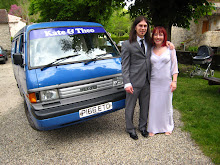
So we haven't blogged for a while as we've been pretty busy...
Buying a house:
We've found a lovely three-bedroom semi in north Bristol, near where I'm going to be working from September. Things are going relatively smoothly - the surveyor's report threw up a few kinks, but nothing major - and we're hoping to complete on August 1st.
Starting a new (old) job:
I'm back at the language school where I taught last summer. Teaching a class of 9, adult, motivated students who are genuinely interested in the topic has been an absolute pleasure. I am wondering why the hell I wanted to switch from TEFL to teaching in secondary schools?
Socialising:
After my PGCE course finished we sped down to Cornwall for the weekend, then back up the M5 to Oxford, before heading to a few kids' parties in Bristol, hit Domstock in Fairford and I managed to catch up with some old friends in London last Saturday.
And being parents of course.
Actually, we're thinking of stopping the blog after August. We seem to have both run out of steam a bit and, as I'm about to take up a teaching role, reducing my web-presence would be no bad thing. The blog which began as a chronicle of our wedding preparations, then our honeymoon, followed by our life in Madrid, seems to have run its course. It may be time to move on...
Showing posts with label PGCE. Show all posts
Showing posts with label PGCE. Show all posts
Monday, 16 July 2012

Sunday, 17 June 2012
Limbo - by Theo
If we've been quiet on the blog recently it may because we feel a little like we're in limbo. We're waiting.
We've found a house, agreed a price, appointed a solicitor and are now just waiting on a green light from the mortgage company and a decision on a moving date: it could be July 1st or it could be August 1st. Until then we're in Limbo.
I've nearly finished my course: my last assignment has been handed in, just one more week (more like half a week actually, as Wednesday is a day off and Friday only exists in theory) and then I'm done. I then I wait to start work. I no longer feel like a student, but I don't yet feel like a teacher. Limbo.
And of course...

...Rosie is waiting impatiently for the arrival of her little baby brother! 2 months!
We've found a house, agreed a price, appointed a solicitor and are now just waiting on a green light from the mortgage company and a decision on a moving date: it could be July 1st or it could be August 1st. Until then we're in Limbo.
I've nearly finished my course: my last assignment has been handed in, just one more week (more like half a week actually, as Wednesday is a day off and Friday only exists in theory) and then I'm done. I then I wait to start work. I no longer feel like a student, but I don't yet feel like a teacher. Limbo.
And of course...

...Rosie is waiting impatiently for the arrival of her little baby brother! 2 months!
Sunday, 13 May 2012
Summer placement - by Theo
The University of Bristol PGCE course involves 3 teaching placements in schools: 7 weeks in the autumn; 12 weeks in the spring, the whole of terms 3 and 4 effectively; and 4 weeks in the summer. A grand total of 120 in a school setting.
As I began my final placement I was in two minds. I couldn't decide whether the final placement was; a) a bit of a pointless add-on, appended to the end of the course to ensure trainees achieve the statutory requirements for time spent in school or b) the true test of a trainee, which sorts out the outstanding from the mediocre. Let me explain.
Much like Ofsted, the course ranks students on a 4 point scale across various criteria - very good, good, satisfactory and cause for concern. So far I've been judged very good or good in all categories, and so, in my case, it seems as if I've got nothing to prove and everything to lose - I can only really be judged worse! This fact seems exacerbated by the stipulation that we are to use the 4 week placement to work on any areas of weakness and to extend ourselves by teaching year groups and topics we have yet to cover.
Yet it is precisely this which, I suppose, is the true test of us trainees as teachers - can we, in 4 weeks, go into a new class, already 3 weeks into a scheme of work and take over instantly, making a difference to these young people (or, at the very least, not doing any damage to their education). While I seemed to have had little trouble doing this in a Year 12 AS class last week, taking back my old Year 9 class and seeing that all my patient work on behaviour the past two terms had come undone during my brief absence was a short, sharp shock. Taking on a Year 7 class with extremely low-literacy levels and learning to differentiate and personalise accordingly in such a short space of time is going to be a real test.
So while (like most of my fellow trainees it seems) I've got one eye on September and my first post, and the other on my final assignment, it seems that I really should be taking this placement a lot more seriously. Glad it took me a week to figure that one out then!
As I began my final placement I was in two minds. I couldn't decide whether the final placement was; a) a bit of a pointless add-on, appended to the end of the course to ensure trainees achieve the statutory requirements for time spent in school or b) the true test of a trainee, which sorts out the outstanding from the mediocre. Let me explain.
Much like Ofsted, the course ranks students on a 4 point scale across various criteria - very good, good, satisfactory and cause for concern. So far I've been judged very good or good in all categories, and so, in my case, it seems as if I've got nothing to prove and everything to lose - I can only really be judged worse! This fact seems exacerbated by the stipulation that we are to use the 4 week placement to work on any areas of weakness and to extend ourselves by teaching year groups and topics we have yet to cover.
Yet it is precisely this which, I suppose, is the true test of us trainees as teachers - can we, in 4 weeks, go into a new class, already 3 weeks into a scheme of work and take over instantly, making a difference to these young people (or, at the very least, not doing any damage to their education). While I seemed to have had little trouble doing this in a Year 12 AS class last week, taking back my old Year 9 class and seeing that all my patient work on behaviour the past two terms had come undone during my brief absence was a short, sharp shock. Taking on a Year 7 class with extremely low-literacy levels and learning to differentiate and personalise accordingly in such a short space of time is going to be a real test.
So while (like most of my fellow trainees it seems) I've got one eye on September and my first post, and the other on my final assignment, it seems that I really should be taking this placement a lot more seriously. Glad it took me a week to figure that one out then!
Saturday, 7 April 2012
5,4,3,2,1 by Theo
Throughout my PGCE year I've seen all kinds of ways in which teachers control their students. By far and away the most common technique, which I've seen from Primary School to 6th Form, is the countdown. "Right I'd like everyone quiet and facing this way in 5, 4, 3, 2, 1." It usually works.
Nevertheless, I was somewhat sceptical when Kate started trying this with Rosie. After all she's only two and, if I get mixed results with my Year 9 class, I was doubtful it would work. But work it does - in Spanish as well as English - most of the time. "Yo voy a contar desde 5 a 0, y cuando estoy a 0 voy a cambiar tu panal" usually results in a truculent Rosie lying on the changing mat of her own volition by the time I get to 1.
I suspect, however, that the shoe is about to be on the other foot. Just this week Rosie has started saying, parrot fashion, "I'm going to count from 5 to 0, and when I get to five I'm coming to get you. 5,4,3,2,1,0. I'm coming to get you." It's very cute, but I reckon it won't be long before she starts saying to us: "Daddy, I'm going to count from 5 to 0, and I when I get to 0 you're going to give me more cake..."
Nevertheless, I was somewhat sceptical when Kate started trying this with Rosie. After all she's only two and, if I get mixed results with my Year 9 class, I was doubtful it would work. But work it does - in Spanish as well as English - most of the time. "Yo voy a contar desde 5 a 0, y cuando estoy a 0 voy a cambiar tu panal" usually results in a truculent Rosie lying on the changing mat of her own volition by the time I get to 1.
I suspect, however, that the shoe is about to be on the other foot. Just this week Rosie has started saying, parrot fashion, "I'm going to count from 5 to 0, and when I get to five I'm coming to get you. 5,4,3,2,1,0. I'm coming to get you." It's very cute, but I reckon it won't be long before she starts saying to us: "Daddy, I'm going to count from 5 to 0, and I when I get to 0 you're going to give me more cake..."
Tuesday, 3 April 2012
Holiday! by Theo
Made it! After a less-than-frantic end of term as I managed to stay on top of marking, planning and prepping revision materials for Year 11, we hit the holidays dancing. In a couple of senses.
Rosie now has her own playlist on the ipod (featuring Feist, The Fall, Manu Chao, Bucky, Harry Belafonte) abd a post-dinner dance with Daddy is rapidly becoming part of her routine. Meanwhile Kate and I celebrated our 4th wedding anniversary with an evening of dance at Circo Media, watching rather than participating, which was enjoyable if not spectacular. I'm now trying to squeeze an EPS assignment around various visits before we head down to Cornwall at the weekend.
Best of all though, as I'm still a student, rather than a fully fledged teacher, I get 3 weeks off!
Rosie now has her own playlist on the ipod (featuring Feist, The Fall, Manu Chao, Bucky, Harry Belafonte) abd a post-dinner dance with Daddy is rapidly becoming part of her routine. Meanwhile Kate and I celebrated our 4th wedding anniversary with an evening of dance at Circo Media, watching rather than participating, which was enjoyable if not spectacular. I'm now trying to squeeze an EPS assignment around various visits before we head down to Cornwall at the weekend.
Best of all though, as I'm still a student, rather than a fully fledged teacher, I get 3 weeks off!
Sunday, 25 March 2012
getting there - by Theo
One week to go of the Spring Term and I feel as if I'm on the verge of reaching a tipping point, upon which everything will become much easier (or possibly much harder, but in other ways). Planning has become quick, easy and relatively stress free. While not every lesson goes to plan - several Year 9 students are still trying to test my resolve to make them work, by hook or by crook - the majority do. My marking work load has grown, but I'm getting quicker and more focussed in that area too. My do list is gradually shortening, with a few long-standing items finally ticked off. I feel that I am not bending the the truth when I reply in the affirmative to yet another query from a random pupil as to whether I am a 'real' teacher. It's all starting to gel.
So much so in fact that I felt able to take most of yesterday off: I spent the morning baking with Rosie while Kate hit a newly new sale, then we all headed off for a delicious brunch with Tom and Claire in Long Ashton, followed by a walk in the beautiful sunshine to the local play park. My life is slowly returning. Fabulous.
So much so in fact that I felt able to take most of yesterday off: I spent the morning baking with Rosie while Kate hit a newly new sale, then we all headed off for a delicious brunch with Tom and Claire in Long Ashton, followed by a walk in the beautiful sunshine to the local play park. My life is slowly returning. Fabulous.
Friday, 9 March 2012
interview - by Theo
On Tuesday I went for my first interview, at a school I'd barely heard of before applying. To be honest I'd actually be holding out for a job at my placement school, but they still hadn't gotten around to advertising the post, so I thought I'd apply anyway, for the practice.
I headed up to the school, arriving nice and early, clutching a bag bulging with lesson plans and documents, plus my computer - I was hoping to have some spare time to do some planning for my Year 8s the next day. First impressions of the school were good - the building was attractive and modern and the students were smart. Appearance wise that is - ties actually being worn closer to the neck than the waist, a rarity where I am at the moment. I began to like the place. However, once I met the other candidates, all thoughts of me getting the job vanished: I was the only student - the others were already qualified - while one was working at the school in another role and a second was second-in-department up North and looking to move back to Bristol. In a rapidly expanding school needing a teacher who could hit the ground running, I figured I stood no chance. Still, it would be good practice and at least I'd get some feedback on my lesson.
I got to teach first. Year 9, top set, with a wide brief of teaching 'engaging and descriptive writing'. I also had to teach to OFSTED's 'good' standard ensuring all students progressed. Gulp! I'd decide we would use onomatopoeia to create either cacophony or euphony; I was pretty certain nobody else would have done anything similar with them recently. When I met the class I realised this was definitely true: what was I thinking! However, despite a class full of faces that screamed 'how is this relevant to me?', everyone did in fact, progressed. So at least I wasn't going home at break-time. Phew!
Next I had a tour from two charming Year 11 students who happily admitted that they found English dull and irrelevant, an impression I also got from the five student panellist who interviewed me after my tour. They quizzed me about how I might make lessons fun - I resisted responding with 'fun for whom?'
A marking task followed - grading two GCSE coursework pieces against the assessment criteria and leaving feedback on how to improve. The standard was pretty high: the students may not enjoy English, but they do ok! So all that was left was the big interview....
I had about an hour off, during which time I did actually manage to get some lesson planning done, before I was called in. I was lucky to be the first called through, and the 45 minutes whizzed by. I felt I'd done OK, though inevitably I immediately thought of the about 10 better answers I could have given as I drove home. I'd also wished I'd had something more impressive to say than "'Heartstone' by CJ Samson" when they asked what book I was reading. Still, at least they knew I was honest. Anyway, I was done by 2pm, a bonus as it meant I was back in time to take Rosie to the park: it was a beautiful sunny day.
They said they would call everyone, regardless of whether they had been successful or not, the following day - they had four more interviewees to see - so I was expecting a call. Right in the middle of Year 8 parents' evening.
I got it....
Thrilled!
I headed up to the school, arriving nice and early, clutching a bag bulging with lesson plans and documents, plus my computer - I was hoping to have some spare time to do some planning for my Year 8s the next day. First impressions of the school were good - the building was attractive and modern and the students were smart. Appearance wise that is - ties actually being worn closer to the neck than the waist, a rarity where I am at the moment. I began to like the place. However, once I met the other candidates, all thoughts of me getting the job vanished: I was the only student - the others were already qualified - while one was working at the school in another role and a second was second-in-department up North and looking to move back to Bristol. In a rapidly expanding school needing a teacher who could hit the ground running, I figured I stood no chance. Still, it would be good practice and at least I'd get some feedback on my lesson.
I got to teach first. Year 9, top set, with a wide brief of teaching 'engaging and descriptive writing'. I also had to teach to OFSTED's 'good' standard ensuring all students progressed. Gulp! I'd decide we would use onomatopoeia to create either cacophony or euphony; I was pretty certain nobody else would have done anything similar with them recently. When I met the class I realised this was definitely true: what was I thinking! However, despite a class full of faces that screamed 'how is this relevant to me?', everyone did in fact, progressed. So at least I wasn't going home at break-time. Phew!
Next I had a tour from two charming Year 11 students who happily admitted that they found English dull and irrelevant, an impression I also got from the five student panellist who interviewed me after my tour. They quizzed me about how I might make lessons fun - I resisted responding with 'fun for whom?'
A marking task followed - grading two GCSE coursework pieces against the assessment criteria and leaving feedback on how to improve. The standard was pretty high: the students may not enjoy English, but they do ok! So all that was left was the big interview....
I had about an hour off, during which time I did actually manage to get some lesson planning done, before I was called in. I was lucky to be the first called through, and the 45 minutes whizzed by. I felt I'd done OK, though inevitably I immediately thought of the about 10 better answers I could have given as I drove home. I'd also wished I'd had something more impressive to say than "'Heartstone' by CJ Samson" when they asked what book I was reading. Still, at least they knew I was honest. Anyway, I was done by 2pm, a bonus as it meant I was back in time to take Rosie to the park: it was a beautiful sunny day.
They said they would call everyone, regardless of whether they had been successful or not, the following day - they had four more interviewees to see - so I was expecting a call. Right in the middle of Year 8 parents' evening.
I got it....
Thrilled!
Monday, 6 February 2012
a sweet story by Theo
Back in the depths of time (2003-2005) I was Music Editor of a local monthly magazine, Decode. Most people give me blank stares when I mention this as they probably never knew it existed, let alone recall it. However today I got a slightly different reaction...
A new PGCE student has started in the English Department at my placement school. He's at a different University, hence the different start date. As we were chatting he mentioned the name of his band, the rather excellent alt-country outfit The Weary Band. He was amazed I knew them (I've seen them a half-dozen times), so I explained my past in local journalism.
Not only did he remember Decode Magzine, but it turned out that on the strength of a review of the band in Decode a Norwegian guy, freshly arrived in the west country, went along to one of the gigs. He and the future-PGCE student became firm friends and, as a result, the Weary-PGCE student now has a Norwegian wife, his best friend's sister.
It's not often I get told that my editorial choices are responsible for wedding bells! A very sweet turn of events...
A new PGCE student has started in the English Department at my placement school. He's at a different University, hence the different start date. As we were chatting he mentioned the name of his band, the rather excellent alt-country outfit The Weary Band. He was amazed I knew them (I've seen them a half-dozen times), so I explained my past in local journalism.
Not only did he remember Decode Magzine, but it turned out that on the strength of a review of the band in Decode a Norwegian guy, freshly arrived in the west country, went along to one of the gigs. He and the future-PGCE student became firm friends and, as a result, the Weary-PGCE student now has a Norwegian wife, his best friend's sister.
It's not often I get told that my editorial choices are responsible for wedding bells! A very sweet turn of events...
Tuesday, 31 January 2012
The wrong trousers - by Theo
Or rather, complete lack of trousers.
It's really not the best way to start the week - cycling through the snow to school and then realising that you forgot to pack your work trousers, so you have to cycle home again and arrive back just in time for staff briefing. Especially when you're teaching Year 11 first period, the supervising teacher is out sick and the printers aren't working.
Although, on reflection, it probably means that the week can only get better!
It's really not the best way to start the week - cycling through the snow to school and then realising that you forgot to pack your work trousers, so you have to cycle home again and arrive back just in time for staff briefing. Especially when you're teaching Year 11 first period, the supervising teacher is out sick and the printers aren't working.
Although, on reflection, it probably means that the week can only get better!
Sunday, 22 January 2012
because it's worth it - by Theo
I was asking whether the sacrifices and stresses of the course were worth it, and the answer is: yes. I'm really, really enjoying the teaching. It's hard work, which some of the concepts proving to be an intellectual challenge, while controlling the students is an even bigger one. But on the days when I pretty much just teach, whizzing from one class to another, it is such a buzz, especially when the students come up with something even better than you'd hoped for.
Mind you, I'm not so into it that a day back at Uni -with a 9.30 start and a 3.30 finish- didn't feel like a holiday!
Mind you, I'm not so into it that a day back at Uni -with a 9.30 start and a 3.30 finish- didn't feel like a holiday!
Tuesday, 17 January 2012
My new life by Theo
I left for work this morning before Rosie woke up, at 7.20am. I helped out in a PSHE class based around living costs, observed a science lesson, taught Animal Farm to Year 10 for a double then spent the rest of the day marking books, planning lessons and preparing resources. I finally left at 5.15pm.
Rosie insisted Kate do bath time this evening - usually I do - hence I've got ten minutes free to write this blog. I'll go up in a bit, read stories with Rosie, then, after she's gone to bed, I'll probably work til 10ish planning lessons, editting one of my assignments and preparing resources.
'Is it all worth it?' I wonder....
(to be continued)
Rosie insisted Kate do bath time this evening - usually I do - hence I've got ten minutes free to write this blog. I'll go up in a bit, read stories with Rosie, then, after she's gone to bed, I'll probably work til 10ish planning lessons, editting one of my assignments and preparing resources.
'Is it all worth it?' I wonder....
(to be continued)
Saturday, 17 December 2011
End of Term - by Theo
Yesterday was our last day of term at the university, with many schools in the Bristol LEA having already finished for the Christmas holidays. We had tea and cake and a fairly relaxed program of feedback on the course so far, tips on behaviour management and advice on job applications. Yep, we may still have 6 months of the course to go, but we're already thinking about, and being advised on, job hunting.
Thinking back over the course, as we had to do yesterday, made me realise how much I've been enjoying being a student again. Yes, I've enjoyed the actual teaching too, and I'm really looking forward to my placement in the spring term when I'll have a 2/3rds timetable and only two days at university. But the lectures and the learning has been absolutely fascinating, while the reading we've been asked to do as research for assignments has (in most cases) been a pleasure rather than a chore, even if at times I've wondered when exactly I'd find time to fit it all in. The pace has been unrelenting - there has always been something I should be doing - even over the Christmas break we've an assignment to finish off and lessons to plan for the first week back. Yet it's been a great experience so far, and I'm going to miss the university side of things while on placement in the spring term. At the back of my mind I'm already wondering whether at some point down the line I may want to return to Bristol Uni once more...
Thinking back over the course, as we had to do yesterday, made me realise how much I've been enjoying being a student again. Yes, I've enjoyed the actual teaching too, and I'm really looking forward to my placement in the spring term when I'll have a 2/3rds timetable and only two days at university. But the lectures and the learning has been absolutely fascinating, while the reading we've been asked to do as research for assignments has (in most cases) been a pleasure rather than a chore, even if at times I've wondered when exactly I'd find time to fit it all in. The pace has been unrelenting - there has always been something I should be doing - even over the Christmas break we've an assignment to finish off and lessons to plan for the first week back. Yet it's been a great experience so far, and I'm going to miss the university side of things while on placement in the spring term. At the back of my mind I'm already wondering whether at some point down the line I may want to return to Bristol Uni once more...
Wednesday, 16 November 2011
first observation - by Theo
Today I had my first observation by my University Tutor, a man who has trained at least one person in every English Department west of Reading (or so it seems - he's been at the University's Education Department for 25 years). This was a formal observation which would count towards my final grade. So no pressure then.
Actually I wasn't feeling too much pressure. I'd been observed by somebody in the 15 or so classes I had taught prior to today (plus loads as an EFL teacher), so wasn't feeling too unnerved at the prospect of having somebody commenting on my every utterance. Plus I always try to keep in mind that it is through being observed and reflecting on the comments you get back that you learn. So, bring it on.
I was teaching a Year 10 class that I had taught twice before. Their aim at the end of the unit is to write a review of the film, Jaws, and after two classes looking at how film makers use camera angles and sound to create tension, we were now looking at effective language use in reviews. The class went well. Not brilliantly, but a bit more than OK. It wasn't inaccessibly hard, but it wasn't a stroll in the park for them either. They behaved. They learned (something). We finished on time. It was alright.
I've still got loads to do. Both my Associate Tutor (who was quite nervous as it's her first year as an AT and she had to give her feedback first - so essentially she was being observed too!) and University Tutor were complimentary and thought I was doing better than they might expect at this point in the PGCE course. They were really pleased with my planning and consideration of the needs of individual students; I've my EFL experience to thank for that I guess. But there is plenty of room for me to improve, with a few of the things being:
Actually I wasn't feeling too much pressure. I'd been observed by somebody in the 15 or so classes I had taught prior to today (plus loads as an EFL teacher), so wasn't feeling too unnerved at the prospect of having somebody commenting on my every utterance. Plus I always try to keep in mind that it is through being observed and reflecting on the comments you get back that you learn. So, bring it on.
I was teaching a Year 10 class that I had taught twice before. Their aim at the end of the unit is to write a review of the film, Jaws, and after two classes looking at how film makers use camera angles and sound to create tension, we were now looking at effective language use in reviews. The class went well. Not brilliantly, but a bit more than OK. It wasn't inaccessibly hard, but it wasn't a stroll in the park for them either. They behaved. They learned (something). We finished on time. It was alright.
I've still got loads to do. Both my Associate Tutor (who was quite nervous as it's her first year as an AT and she had to give her feedback first - so essentially she was being observed too!) and University Tutor were complimentary and thought I was doing better than they might expect at this point in the PGCE course. They were really pleased with my planning and consideration of the needs of individual students; I've my EFL experience to thank for that I guess. But there is plenty of room for me to improve, with a few of the things being:
- I need to think about how to get the students to reflect on their work, to realise what they have learned.
- I need to cut down the amount of Teacher Talk and build in more steps to the tasks so the students can guide themselves through with minimum input from me.
- Leaving space for individual work and only doing group work if there is a real point to it.
Friday, 11 November 2011
What a difference a year makes... by Theo
In mid-February this year the TDA announced that English PGCE students would no longer receive a bursary. This week the Government has announced that next year's English PGCE students will receive a bursary of up to £9,000.
We should have spent another year in Madrid.
We should have spent another year in Madrid.
Sunday, 6 November 2011
Teaching as Parenting - by Theo
On the Bristol PGCE course many demands are made of us as trainee English teachers. We have to have a wide-ranging knowledge and understanding of the literary canon (and alternative canons). Our knowledge of English grammar and morphology must be sufficiently strong to teach English Language A level. We may be called upon to teach Media Studies and Drama classes, and so must be well grounded in both the theory and practice of those subjects. We need to keep up to date with the latest strategies, guidelines and statutory requirements issued by the Government, LEAs and exam boards. On top of all this, we have to understand how children learn to speak, read and write from a baby's earliest days through to adulthood. It's this last aspect that, as a parent to 21 month-old Rosie, I find most fascinating.
Most parents teach their children to speak more or less unconsciously: they talk to their child, and the child learns. Kate and I have of course made the conscious decision to teach Rosie to speak Spanish - neither of us are native speakers yet I speak to her in Spanish and we try to expose her to the language through books and a playgroup. So, having researched bilingualism, we were already slightly more aware of the processes by which children acquire language, but we are even more so now. I feel that as a parent I've got a huge advantage over my peers as I can see, day by day, the theory being put into practice as Rosie's vocabulary and syntax expands. As a parent it's amazing understanding (more or less) what is going on, and it'll be even more amazing once she starts to read (the alphabet: she already 'reads' images), to be able to understand how she is doing it and why she makes the mistakes she will inevitably make.
However, in other ways being a student teacher and also a parent are not so great. This week my lesson planning and marking workload suddenly exploded, so this weekend has been mostly spent in front of the computer writing lesson plans. Indeed I haven't left the house since I got back at 5pm on Friday. Poor Rosie has been at a loss as to why Daddy hasn't been able to take her to the park, as he usually does at weekends, or why he hasn't been keen to let her bang the keys on the laptop. For the first time on the PGCE (and sadly I suspect not the last) I've felt that being a teacher and a parent don't mix, as trying to do both simultaneously simply meant I did neither as well as I would like.
On the last point though I may well be wrong. One of the many essays (Teaching as assisted performance) I've read for my PGCE assignments concludes that in order to be better teachers, we must be more like parents. The authors (Tharp & Gallimore) make the point that the vast majority of parents are extremely successful teachers, instructing their children, usually unconsciously, in language, social skills, spatial awareness, movement and many other things. While acknowledging that behaving like a parent is rarely, if ever, possible within an educational system that crams 30 students into a single classroom, there is definitely something to be said for this approach.
So perhaps I should walk into my new Year 10 class on Wednesday wielding a couple of snooker balls stuffed inside a sock yelling "Who's your daddy now!?"
Maybe not.
Most parents teach their children to speak more or less unconsciously: they talk to their child, and the child learns. Kate and I have of course made the conscious decision to teach Rosie to speak Spanish - neither of us are native speakers yet I speak to her in Spanish and we try to expose her to the language through books and a playgroup. So, having researched bilingualism, we were already slightly more aware of the processes by which children acquire language, but we are even more so now. I feel that as a parent I've got a huge advantage over my peers as I can see, day by day, the theory being put into practice as Rosie's vocabulary and syntax expands. As a parent it's amazing understanding (more or less) what is going on, and it'll be even more amazing once she starts to read (the alphabet: she already 'reads' images), to be able to understand how she is doing it and why she makes the mistakes she will inevitably make.
However, in other ways being a student teacher and also a parent are not so great. This week my lesson planning and marking workload suddenly exploded, so this weekend has been mostly spent in front of the computer writing lesson plans. Indeed I haven't left the house since I got back at 5pm on Friday. Poor Rosie has been at a loss as to why Daddy hasn't been able to take her to the park, as he usually does at weekends, or why he hasn't been keen to let her bang the keys on the laptop. For the first time on the PGCE (and sadly I suspect not the last) I've felt that being a teacher and a parent don't mix, as trying to do both simultaneously simply meant I did neither as well as I would like.
On the last point though I may well be wrong. One of the many essays (Teaching as assisted performance) I've read for my PGCE assignments concludes that in order to be better teachers, we must be more like parents. The authors (Tharp & Gallimore) make the point that the vast majority of parents are extremely successful teachers, instructing their children, usually unconsciously, in language, social skills, spatial awareness, movement and many other things. While acknowledging that behaving like a parent is rarely, if ever, possible within an educational system that crams 30 students into a single classroom, there is definitely something to be said for this approach.
So perhaps I should walk into my new Year 10 class on Wednesday wielding a couple of snooker balls stuffed inside a sock yelling "Who's your daddy now!?"
Maybe not.
Thursday, 20 October 2011
First classes - by Theo
While not quite as swift as the CELTA, which had us teaching on the very first day, the Bristol PGCE course does whip us into classrooms pretty quickly, and today I taught my first full lessons to a Year 7 class & a Year 8 one.
Rosie obviously knew something was up. She must have caught the general buzz of excitement and anticipation, and was clearly thrilled for me. So much so that she felt she had to wake up at 1 am to let me know just how excited she was. And then again at 2 am. And again at 4.30 am. So, thanks to my darling daughter's enthusiasm for my fledgling secondary school career, I went into school on about 3 hours sleep.
Great.
The first class, the Year 7s, were third period after break. Having been in the school for nearly three weeks now they've got to know me a bit. I've been observing in their classes across the curriculum and had helped out in their class earlier in the week delivering sections of the lesson. So I figured it would go OK. And I guess it did. It was no shining triumph, but no disaster either. The class looked at the construction of character through dialogue in Skellig, particularly through the use of types of questions. The problem was that I was too ambitious in what I was trying to teach them and, being a mixed ability class, this meant that some of them were very confused by the end. I hope this won't have put them off - classroom management is a lot about the students trusting you and the activities you set. Too many activities which they just don't get and I'll lose that trust.
Year 8. Period 5. The tiredness was starting to bite. We were looking at Holes by Louis Sachar, and I had another ambitious lesson planned involving identifying literary devices (alliteration, onomatopoeia, etc), creative writing and textual comparisons. All in an hour during the last lesson of the day with a class who had become convinced I was stalking them. I threw myself at it. It felt great. We whizzed along taking nearly everyone with us, and many of the students going way beyond what I'd hoped for. We were flying, ahead of time. A couple of students, who through laziness rather than lack of comprehension had barely written a word, could have perhaps done with more time, but with ten minutes to go we'd basically finished what I'd planned. So we quickly whipped out the book and read through another chapter before the bell went and the adrenaline faded. Phew. What a high.
Afterwards my tutor commented that she felt the ending lacked a little something. It needed a chance for the students to talk about what they'd learned. That's when I turned over my four-page long lesson plan to realise I'd left out half of my final activity, which would have done exactly that.
Bugger.
You live, you learn. At least that's what I hope my students will do.
Rosie obviously knew something was up. She must have caught the general buzz of excitement and anticipation, and was clearly thrilled for me. So much so that she felt she had to wake up at 1 am to let me know just how excited she was. And then again at 2 am. And again at 4.30 am. So, thanks to my darling daughter's enthusiasm for my fledgling secondary school career, I went into school on about 3 hours sleep.
Great.
The first class, the Year 7s, were third period after break. Having been in the school for nearly three weeks now they've got to know me a bit. I've been observing in their classes across the curriculum and had helped out in their class earlier in the week delivering sections of the lesson. So I figured it would go OK. And I guess it did. It was no shining triumph, but no disaster either. The class looked at the construction of character through dialogue in Skellig, particularly through the use of types of questions. The problem was that I was too ambitious in what I was trying to teach them and, being a mixed ability class, this meant that some of them were very confused by the end. I hope this won't have put them off - classroom management is a lot about the students trusting you and the activities you set. Too many activities which they just don't get and I'll lose that trust.
Year 8. Period 5. The tiredness was starting to bite. We were looking at Holes by Louis Sachar, and I had another ambitious lesson planned involving identifying literary devices (alliteration, onomatopoeia, etc), creative writing and textual comparisons. All in an hour during the last lesson of the day with a class who had become convinced I was stalking them. I threw myself at it. It felt great. We whizzed along taking nearly everyone with us, and many of the students going way beyond what I'd hoped for. We were flying, ahead of time. A couple of students, who through laziness rather than lack of comprehension had barely written a word, could have perhaps done with more time, but with ten minutes to go we'd basically finished what I'd planned. So we quickly whipped out the book and read through another chapter before the bell went and the adrenaline faded. Phew. What a high.
Afterwards my tutor commented that she felt the ending lacked a little something. It needed a chance for the students to talk about what they'd learned. That's when I turned over my four-page long lesson plan to realise I'd left out half of my final activity, which would have done exactly that.
Bugger.
You live, you learn. At least that's what I hope my students will do.
Sunday, 25 September 2011
Student again - by Theo
As I took my seat on Monday it was impossible not to feel both a sense of nostalgia and of time standing still; after all, nearly 11 years previously I had sat down in the very same room (Chemistry Lecture Theatre 1) for my Undergraduate Philosophy lectures. Where did that decade go?!?! There I was again, a Bristol University student, for the third time, this time to begin a PGCE in Secondary English.
It's been a great first week; challenging, but not too intense. I seem to be in a reasonably privileged position of having a background in literature, a very solid grounding in English grammar and also teaching experience; few of my 29 course mates can say the same, it seems. I've been surprised at the range of backgrounds - some did degrees in Drama, others in Linguistics. They are a lovely bunch, though the demographics would surprise nobody - 1 male student to every 5 female ones, with only one student being obviously of a BME background. Across the wider PGCE course - 200-odd students studying to be teachers in Science, History, MFL, Geography, Maths, RE and Citizenship - this seems to be the case too. I've met a couple of other parents, though there are none doing English. However I did run into an old classmate, Susa, who is studying to be a German and Spanish Teacher - she only got a place on the course recently and it came as a complete, but very pleasant, surprise to met her at the lecture.
So far most of the lectures have just dealt with the 'admin' side of the course, plus getting to know you style activities within our subject groups. The real work begins next week I suspect, and already we've got piles of reading to get through. What work we have done - lesson planning, grammar analysis - hasn't seemed all that far away from techniques I'm used to in a TEFL context, all guided discovery and CELTA style planning proformas. We'll be in schools though from the first week of October and that will be a huge difference. I can't wait actually!
It's been a great first week; challenging, but not too intense. I seem to be in a reasonably privileged position of having a background in literature, a very solid grounding in English grammar and also teaching experience; few of my 29 course mates can say the same, it seems. I've been surprised at the range of backgrounds - some did degrees in Drama, others in Linguistics. They are a lovely bunch, though the demographics would surprise nobody - 1 male student to every 5 female ones, with only one student being obviously of a BME background. Across the wider PGCE course - 200-odd students studying to be teachers in Science, History, MFL, Geography, Maths, RE and Citizenship - this seems to be the case too. I've met a couple of other parents, though there are none doing English. However I did run into an old classmate, Susa, who is studying to be a German and Spanish Teacher - she only got a place on the course recently and it came as a complete, but very pleasant, surprise to met her at the lecture.
So far most of the lectures have just dealt with the 'admin' side of the course, plus getting to know you style activities within our subject groups. The real work begins next week I suspect, and already we've got piles of reading to get through. What work we have done - lesson planning, grammar analysis - hasn't seemed all that far away from techniques I'm used to in a TEFL context, all guided discovery and CELTA style planning proformas. We'll be in schools though from the first week of October and that will be a huge difference. I can't wait actually!
Friday, 16 September 2011
Why I don't want to be a Primary School teacher - by Theo
I have had the privilege to have spent the past two weeks observing in Elmlea Junior School up in Westbury-on-Trym. As part of my PGCE I was obliged to do this, but it didn't feel like an obligation. I really enjoyed it, in no small part thanks to the staff and students at Elmlea, especially my friend Stu, a Year 6 Teacher there who arranged it all and whose classes I was mostly observing.

However, no matter how nice a time I had there, it made me realise I had definitely made the right decision to choose secondary education over primary. I had been having doubts as, after all, primary is so much more important; if students don't get off to a good start, the gap between them and their peers has widened to such an extent by the time they reach secondary school that it is very hard to narrow it and help them catch up. In a class of 30 students, all demanding your attention, it's probably nigh on impossible. But it's not for me.
For starters I'm rubbish at Art. Stu really likes the fact that he gets to teach all the subjects - Literacy, Maths, History, PE, Geography, Music, PSHE and Science - but I would have never managed to get a class to produce masks like these.

I'd be pretty rubbish in singing class too!
Plus, as nice as Stu's Year 6 class were, it would drive me crazy to have the same class all the time. I don't mind teaching the same material, but I like changing students every hour or so, shifting the dynamic and allowing me to go more in depth into the topic.
So, big thanks everyone at Elmlea, but it's secondary for me. The PGCE starts Monday - here we go!
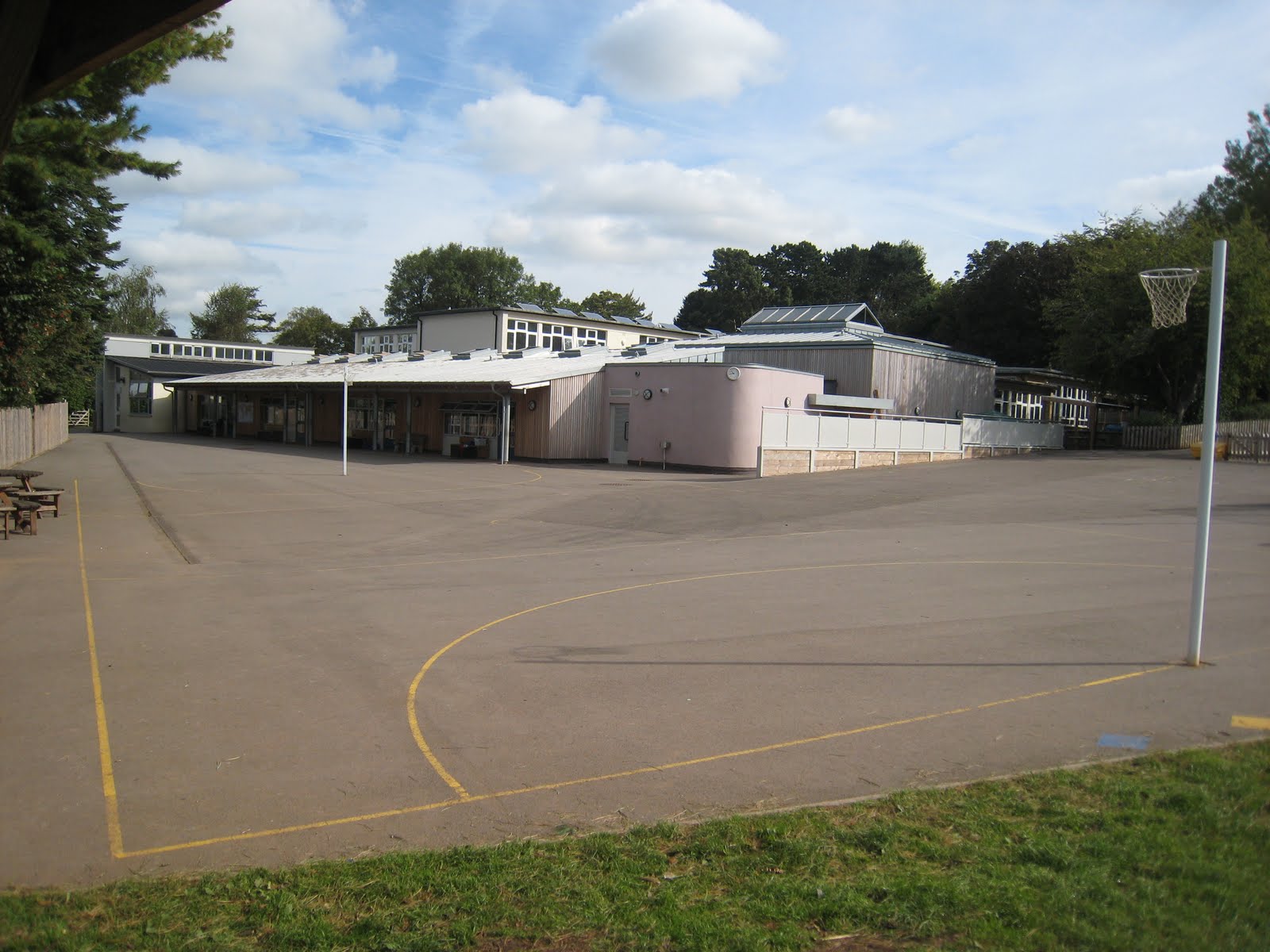
However, no matter how nice a time I had there, it made me realise I had definitely made the right decision to choose secondary education over primary. I had been having doubts as, after all, primary is so much more important; if students don't get off to a good start, the gap between them and their peers has widened to such an extent by the time they reach secondary school that it is very hard to narrow it and help them catch up. In a class of 30 students, all demanding your attention, it's probably nigh on impossible. But it's not for me.
For starters I'm rubbish at Art. Stu really likes the fact that he gets to teach all the subjects - Literacy, Maths, History, PE, Geography, Music, PSHE and Science - but I would have never managed to get a class to produce masks like these.

I'd be pretty rubbish in singing class too!
Plus, as nice as Stu's Year 6 class were, it would drive me crazy to have the same class all the time. I don't mind teaching the same material, but I like changing students every hour or so, shifting the dynamic and allowing me to go more in depth into the topic.
So, big thanks everyone at Elmlea, but it's secondary for me. The PGCE starts Monday - here we go!
Tuesday, 23 August 2011
Reading - by Theo
We've been a bit quiet on the blog of late and one of the reasons is the mountain of reading I've got to get through before my PGCE course starts in earnest in mid-September. A couple of books by David Crystal on the English language have been enlightening, entertaining and occasionally hilarious. Bennett and Royle's Introduction to Literary Criticism, which was on my undergraduate reading list, and Shepherd and Wallis's Studying Plays have made it clear to me why I only got a class 2:1 bachelor's degree. Meanwhile the reading I've been doing on Literacy (Beard (ed) & Garton) has been fascinating and not just from a teaching perspective. It's been amazing to discover how Rosie is acquiring language and what exactly we can do (and shouldn't do) to help her.
Plus it didn't help that we finally got 6 boxes of books down from my parents' attic - so naturally I've had to spend ages arranging and then rearranging them!
Plus it didn't help that we finally got 6 boxes of books down from my parents' attic - so naturally I've had to spend ages arranging and then rearranging them!
Sunday, 27 February 2011
PGCE - by Theo
"Phew! Doing the Madrid run is always a work out," muttered one of the Easyjet hostesses, having just hauled another over-stuffed, overweight suitcase into the overhead locker. Having got cover for my last two classes I'd breezed through Barajas airport with my minimal luggage, in quiet contrast to the majority of the young, 20-something Spaniards with whom I was sharing the flight to Bristol. While they were jabbering away excitedly - including through the safety announcements, which earned them a few death-stares from the staff - I was focused more on likely questions I might get in my PGCE interview the next day, the reason for my whistle-stop visit back to Bristol while Kate had the "single parent experience" for 36 hours.
Friday found me nervously hanging around the lobby of the Bristol University School of Education in Berkeley Square. I'd spent the night at my sister's, just around the corner in Priory Road, but had slept terribly. My sister and her husband were, annoyingly, on holiday that weekend in Norway and seemed to have taken their alarm clock with them. Forced to rely on my ancient English mobile held together by several layers of sellotape, my paranoid dreams woke me up 6 times during the night, frantic that I'd overslept and had missed the interview. Obviously I didn't.
Usually they don't do interviews on a Friday, but given my circumstances they'd made an exception. As a result there was only one other interviewee (also a Berry) whereas usually there would be six at a time. I guess this was to our benefit as part of the interview was a general conversation, discussing questions between us. Easier to manage the conversation and stand out when there are only two of you! In fact the interviewer seemed to be quite interested in what we had to say, even deviating from the script to ask our opinions about contemporary (educational) events. We also had to collaborate on a feedback task, which was fine, and furthermore there was a written assessment (something I hadn't done for about 7 years!) and a brief one-to-one interview.
All in all I left feeling pretty positive, which was great as it meant I could actually relax and enjoy myself that evening, with wine, good company and delicious homemade food round at Sam and Stu's. No too late a night of course, for while I had to get up early to make my flight back, Stu was off to Uganda on an even earlier flight - 4am!
When applying for a PGCE you do so through a website called GTTR - the teaching equivalent of UCAS if you will. So when the following Tuesday I received a notification that something had changed on my application status I logged in slightly nervously to check. "Unconditional offer". Just two words; I clicked accept. All in all a bit of an anticlimax I thought, after all the effort! Not quite willing to trust in two words on an unassuming website I emailed the department on a pretext (sending them my A level certificates which my parents had been searching for) just to check before I announced it to the world at large. Or, rather, Facebook.
So, there we go. Next September I'll be a student again, and, in all likelihood, rather poor: if I had done the PGCE this year I would have a got a £6,000 bursary. Next year, those studying to be English teachers won't. Bum!
As I type it's a beautiful, warm, if slightly windy day here in Madrid, as it has been for the past week. The blossom is out, and the park (Los Molinos) down the road smells beautiful. Food is fairly cheap, my work is fun, people are friendly, I get to spend lots of time with Kate and Rosie, and, most of all, we'll miss the friends we've made here when we head off. Next year is going to be tough - I've seen my reading list! - but in the end, I reckon it will be more than worth it.
Friday found me nervously hanging around the lobby of the Bristol University School of Education in Berkeley Square. I'd spent the night at my sister's, just around the corner in Priory Road, but had slept terribly. My sister and her husband were, annoyingly, on holiday that weekend in Norway and seemed to have taken their alarm clock with them. Forced to rely on my ancient English mobile held together by several layers of sellotape, my paranoid dreams woke me up 6 times during the night, frantic that I'd overslept and had missed the interview. Obviously I didn't.
Usually they don't do interviews on a Friday, but given my circumstances they'd made an exception. As a result there was only one other interviewee (also a Berry) whereas usually there would be six at a time. I guess this was to our benefit as part of the interview was a general conversation, discussing questions between us. Easier to manage the conversation and stand out when there are only two of you! In fact the interviewer seemed to be quite interested in what we had to say, even deviating from the script to ask our opinions about contemporary (educational) events. We also had to collaborate on a feedback task, which was fine, and furthermore there was a written assessment (something I hadn't done for about 7 years!) and a brief one-to-one interview.
All in all I left feeling pretty positive, which was great as it meant I could actually relax and enjoy myself that evening, with wine, good company and delicious homemade food round at Sam and Stu's. No too late a night of course, for while I had to get up early to make my flight back, Stu was off to Uganda on an even earlier flight - 4am!
When applying for a PGCE you do so through a website called GTTR - the teaching equivalent of UCAS if you will. So when the following Tuesday I received a notification that something had changed on my application status I logged in slightly nervously to check. "Unconditional offer". Just two words; I clicked accept. All in all a bit of an anticlimax I thought, after all the effort! Not quite willing to trust in two words on an unassuming website I emailed the department on a pretext (sending them my A level certificates which my parents had been searching for) just to check before I announced it to the world at large. Or, rather, Facebook.
So, there we go. Next September I'll be a student again, and, in all likelihood, rather poor: if I had done the PGCE this year I would have a got a £6,000 bursary. Next year, those studying to be English teachers won't. Bum!
As I type it's a beautiful, warm, if slightly windy day here in Madrid, as it has been for the past week. The blossom is out, and the park (Los Molinos) down the road smells beautiful. Food is fairly cheap, my work is fun, people are friendly, I get to spend lots of time with Kate and Rosie, and, most of all, we'll miss the friends we've made here when we head off. Next year is going to be tough - I've seen my reading list! - but in the end, I reckon it will be more than worth it.
Subscribe to:
Posts (Atom)

 Posts
Posts

